The problem: DNS trusts blindly
The Domain Name System was designed at a time when security hardly mattered. Without extra protection, a computer asking for the address of your-company.de cannot tell whether the answer is genuine. Attackers exploit this: they inject forged answers and redirect visitors unnoticed to their own servers – to a copy of a login page, for example.
The solution: digital signatures
DNSSEC (Domain Name System Security Extensions) adds a cryptographic signature to every DNS response. The requesting computer uses it to check two things: does the answer really come from the responsible name server? And was it changed on the way? If the check fails, the answer is discarded.
The chain of trust
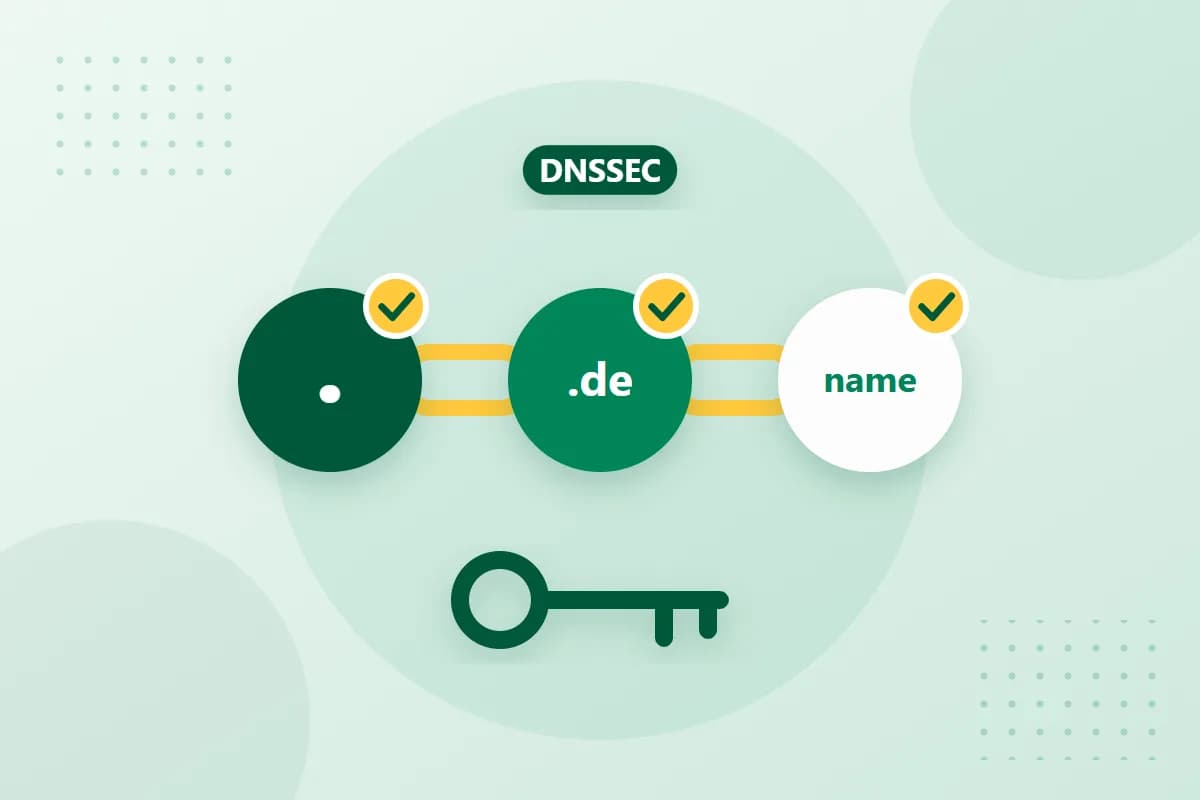
The signatures build on one another. The root of the DNS vouches for the .de extension, and DENIC vouches for your domain. For this purpose, a reference to your zone's key is stored at DENIC. This creates an unbroken chain from the root to your address.
What DNSSEC does not do
DNSSEC does not encrypt anything. It ensures that visitors arrive at the right server – you still secure the connection to it with HTTPS. The two methods complement each other.
Take care when changing provider
If you change name servers, the keys have to match. If an old key reference remains at DENIC, the check fails and your domain can no longer be reached by many users. So plan the switch together with the new provider: either DNSSEC is temporarily deactivated or the new key is stored in good time.
DNSSEC at reg.de
In the Domain-Robot, DNSSEC is active by default when you use our name servers. Signatures and keys are managed automatically – you don't have to take care of anything.
Conclusion
DNSSEC closes an old gap in the foundations of the internet and protects your visitors from redirection. If you have questions about securing your domain, our support team is happy to help.