What new extensions are
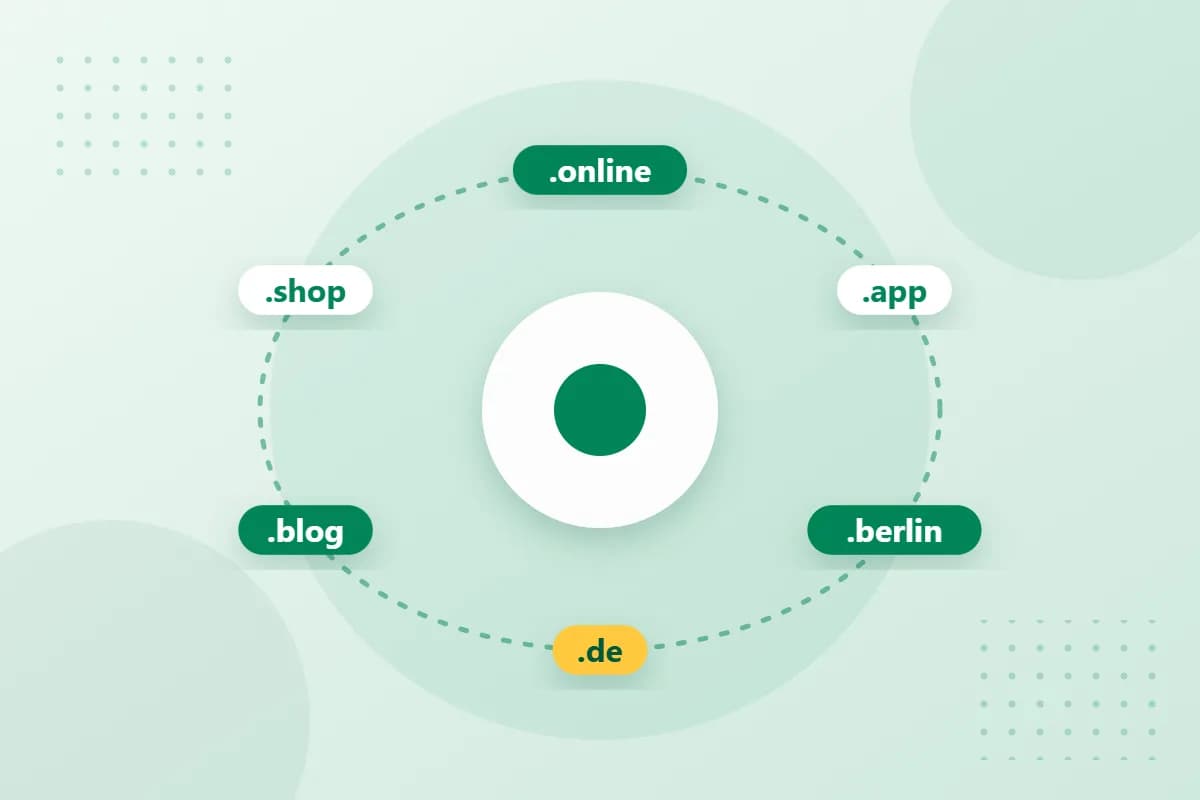
In addition to the classic extensions such as .de or .com, a growing number of new extensions have existed since 2014. They can be roughly divided into three groups:
- Industries and topics: .shop, .online, .app, .blog, .immobilien
- Cities and regions: .berlin, .hamburg, .koeln, .bayern, .nrw
- General terms: .info has been around longer, and others such as .digital or .jetzt have been added
The opportunities
The biggest advantage is availability: while short .de names are often taken, the same address is frequently still free under a new extension. The extension itself can also say something: blumen.shop explains the business model, and with .berlin a business immediately shows where it is at home.
The limits
- Trust and habit: in Germany, most people type .de when in doubt. An unfamiliar extension first has to be memorised – and it is more easily passed on incorrectly.
- Costs: many new extensions are more expensive to renew than .de, and sought-after names are offered as premium domains at a surcharge.
- Technology: individual extensions have special features. With .app, for example, browsers enforce an encrypted connection; without an HTTPS certificate the website cannot be reached.
And the search engines?
For ranking purposes, search engines treat new extensions basically like other generic extensions. A term in the extension does not bring a bonus by itself. A country extension such as .de, on the other hand, clearly signals the connection to Germany.
Our recommendation: combine
For businesses with German customers, .de remains the main address. New extensions are excellent as a supplement: for campaigns, individual products or a regional presence. Redirect the additional domain via 301 to your main site or a suitable subpage.
Conclusion
New extensions are a useful tool but rarely a replacement for .de. You can see which extensions are available at what price in the price list of our domain search.