Why redirects matter
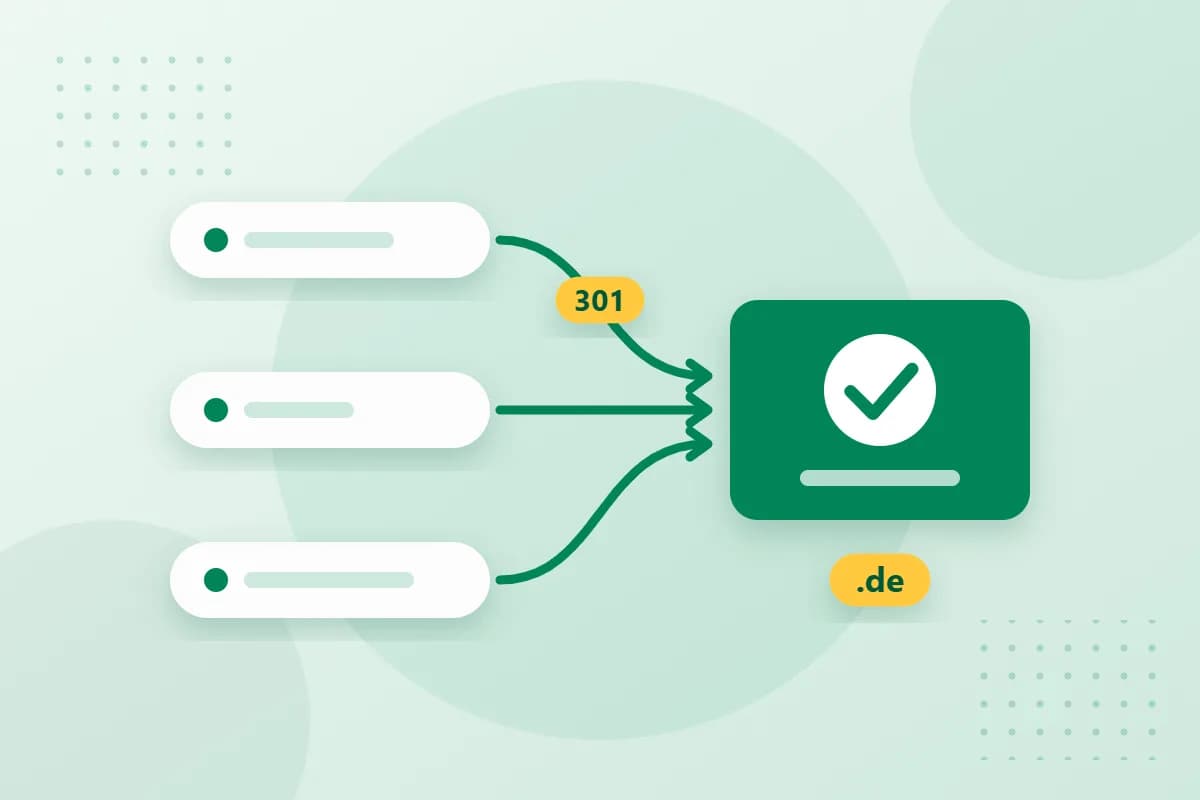
Technically, http://your-company.de, https://your-company.de and https://www.your-company.de are three different addresses. If they all show the same content, links and rankings are split, and visitors see one variant one time and another the next. Redirects bundle everything onto a single main address.
301 or 302?
- 301 – permanent: the page has moved for good. Browsers and search engines remember the new destination, and the strength of the old address passes to the new one. This is the right code for almost all cases.
- 302 – temporary: the destination only applies for a while, for example during maintenance. The old address stays in the index.
Using 302 instead of 301 by mistake wastes impact in the search results.
Define one main address
Decide once on a variant, with or without www, and stick to it. Which one you choose makes no difference to search engines. What matters is that all other variants lead there via 301.
Redirect HTTP to HTTPS
Every request via unsecured http should automatically be redirected to https. Make sure the redirect happens in one step: from http://your-company.de straight to https://www.your-company.de and not via several stops in between. Every additional stop costs loading time.
Bundle additional domains
If you own several domains, for example with an umlaut, with a hyphen or under another extension, redirect them to the main address via 301 as well. Ideally the path is kept: anyone who opens seconddomain.de/contact lands on maindomain.de/contact.
Keep away from frame redirects
With a frame redirect, the old address stays in the address bar while the content of the target page is loaded in a frame. This seems convenient but causes problems on mobile devices, when sharing links and in search engines. Use real 301 redirects instead.
Conclusion
One main address, permanent 301 redirects and HTTPS in a single step – that is all it takes. Do you have additional domains in mind? Check availability in our domain search.