What is what?
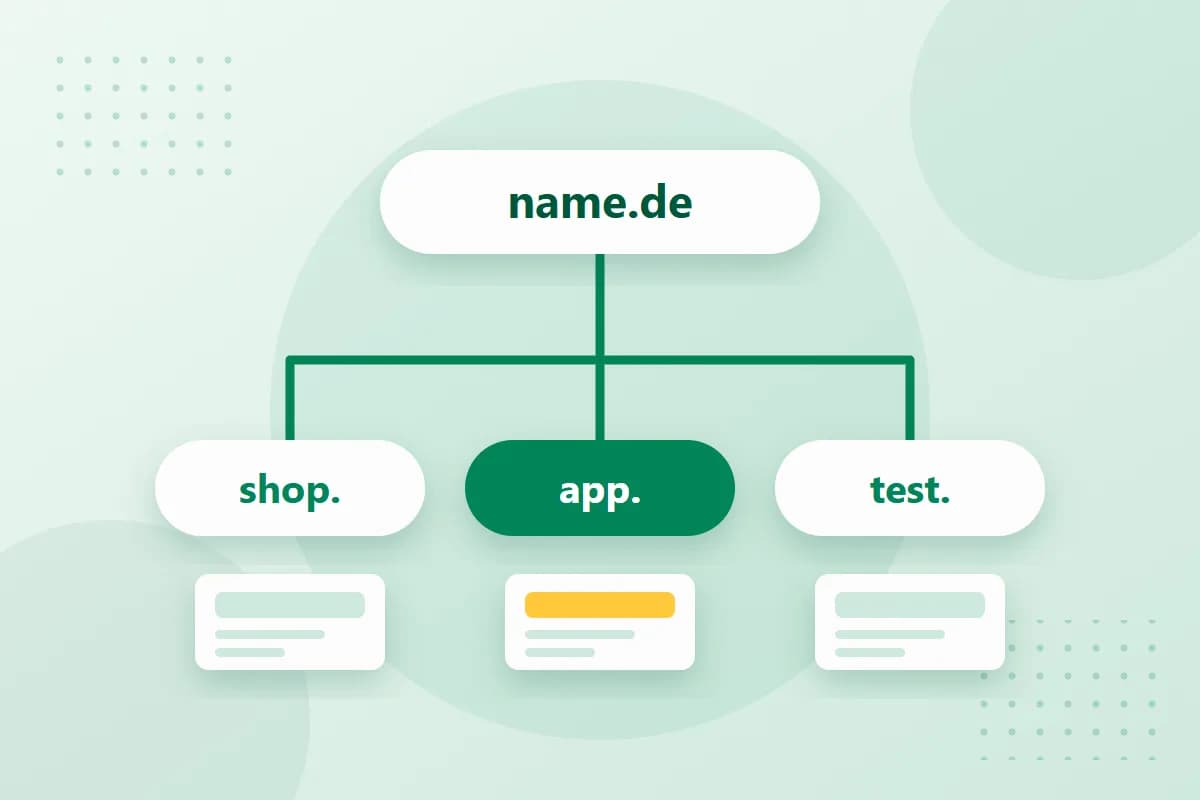
A subdomain comes before your domain name: shop.your-company.de. Technically it is an address of its own with its own DNS record, and it can point to a completely different server from the main site. A subdirectory comes after it: your-company.de/shop. It is part of the same website on the same server.
When a subdirectory is the better choice
If the content belongs thematically to your main site, there are good reasons for the subdirectory:
- Search engines treat subdirectories as part of your website. A blog or guide under your-company.de/blog therefore strengthens the whole domain.
- You maintain just one system, one design and one SSL certificate.
- Visitors clearly remain on the same site.
For a blog, guide, careers page or product catalogue, the subdirectory is therefore usually the right solution.
When a subdomain is worthwhile
A subdomain makes sense when something is technically or thematically independent:
- External services: a shop or booking system that runs with another provider.
- Your own applications: customer portal, support area or web app with its own login.
- Test environments: a copy of the website on which changes are tried out.
- Email sending: newsletters via a subdomain of their own, so that its reputation does not affect your normal emails.
How to set up a subdomain
You don't need to register an additional domain. In the DNS settings you create a new record: an A record if the subdomain points to a server of its own, or a CNAME if it leads to an external service. Remember an SSL certificate that also covers the subdomain.
Two common mistakes
Don't put test environments openly on the web: protect them with a password, otherwise half-finished pages end up in search engines. And delete DNS records of subdomains you no longer use. If a forgotten record points to a cancelled service, strangers can take over the address.
Conclusion
Content that belongs to the main site goes into a subdirectory. Independent systems get a subdomain. At reg.de you manage the DNS records for this in the Domain-Robot. If you have questions, our support team will help.